
Oxygen Therapy for Sports Recovery: What Athletes Should Know Before Booking
If training is already demanding enough, recovery does not need to become another workout.
This guide explains what Oxygen Clinic actually offers, what current research can — and cannot — tell us about oxygen-based recovery methods, and how runners, gym-goers and athletes can use a two-hour chamber visit as structured downtime without turning wellness claims into medical promises.
Take two hours.
Reset your schedule.
People search for oxygen therapy for sports recovery, but the evidence depends heavily on the type of oxygen exposure, pressure, timing and protocol studied. Oxygen Clinic does not promise faster muscle recovery, injury healing or improved athletic performance. What it does offer is a two-hour, oxygen-enriched wellness environment that active people can use as planned rest alongside their existing training and recovery routine.
What does Oxygen Clinic offer active people?
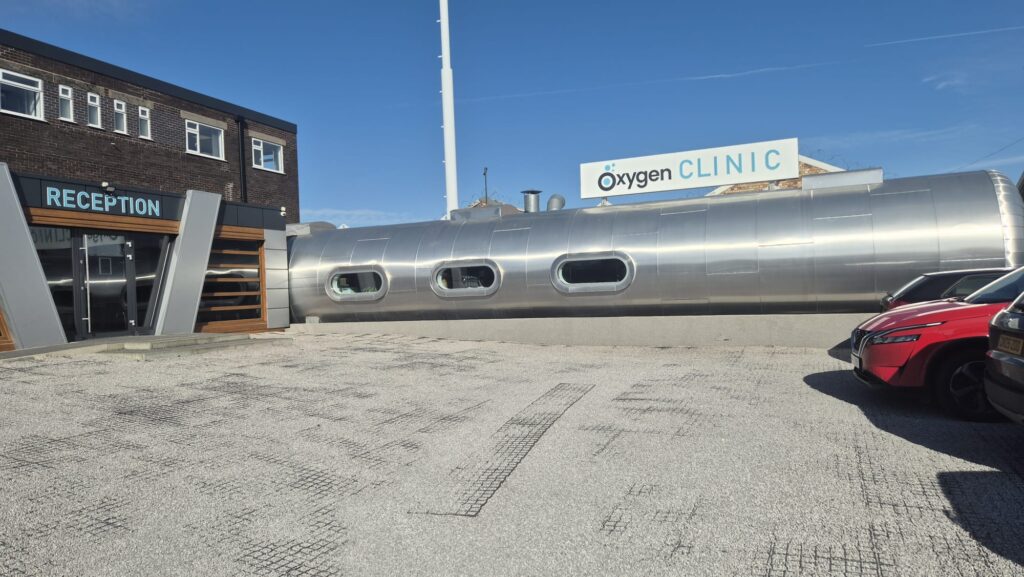
Oxygen Clinic’s chamber operates at approximately 1500 hPa with a controlled 32–40% oxygen environment. A standard visit lasts two hours. You sit inside a room-sized chamber rather than training, exercising or breathing through a medical oxygen mask.
A substantial block of downtime rather than a quick treatment appointment.
Published chamber operating condition, above normal ambient pressure.
Controlled oxygen-enriched room atmosphere, as published by Oxygen Clinic.
Read, work quietly, listen to something or sleep while inside.
Who might find the format useful?
The most defensible reason to consider a session is practical: you want protected time away from training demands, work, screens or a busy schedule. That can appeal to several kinds of active customer without claiming the chamber changes their physiology or performance.
A quiet two-hour block that can sit alongside running, rest days and normal recovery habits.
Useful if you want recovery time to involve doing less rather than adding another physical modality.
A seated environment that can be planned around long rides and existing training blocks.
A non-exercise wellness session that can fit between normal work, training and match commitments.
Does oxygen therapy improve sports recovery?
There is no simple answer that can be transferred directly to Oxygen Clinic. Research uses different pressures, oxygen concentrations, session lengths and populations. Much of the literature studies clinical or experimental hyperbaric oxygen, while other studies look at normobaric hyperoxia. Those are not the same protocol as Oxygen Clinic’s room environment.
| Research | What it found | Why we stay cautious |
|---|---|---|
| 2026 systematic review: normobaric hyperoxic recovery | Reported a modest pooled effect in favour of subsequent performance, while physiological recovery markers were limited or inconsistent. | The protocols were not the same as Oxygen Clinic’s chamber environment. |
| 2026 HBOT review: athletic recovery | Found lower post-recovery blood lactate in pooled data but limited application for short-term power and force production. | This was hyperbaric oxygen treatment, not Oxygen Clinic’s wellness protocol. |
| 2021 HBOT systematic review | Found no statistically significant effect of pre- or post-exercise HBOT on performance or recovery in the pooled analyses. | The literature is heterogeneous and conclusions have changed as new studies appear. |
Sports marketing should not outrun the evidence
UK advertising guidance requires robust evidence for objective health or treatment claims about oxygen therapy. That is why this page talks about rest, routine, comfort and the customer experience rather than claiming Oxygen Clinic treats sports injuries or guarantees faster recovery.
How can a two-hour chamber session fit around training?
Oxygen Clinic does not publish a medically validated athlete protocol, so there is no universal “best” day or exact number of sessions for sports recovery. Treat it as wellness time and plan it around the parts of your routine that are already evidence-based.
Protect the basics first
Sleep, nutrition, hydration, appropriate training load and qualified clinical care remain the foundations.
Choose a realistic slot
Allow for the full two-hour session plus arrival and pressure-change stages rather than squeezing it between commitments.
Use the time your way
Read, work quietly, use headphones or sleep. The chamber is designed for seated downtime.
Judge the experience honestly
Decide whether the protected downtime fits your own routine rather than expecting a guaranteed performance result.
Where should an oxygen chamber sit in a recovery routine?
As an optional wellness layer — not as the foundation.
What if you are injured rather than simply tired from training?
A sports injury is a healthcare issue, not just a recovery preference. Do not use a wellness chamber as a substitute for an appropriate assessment by a doctor, physiotherapist or other suitably qualified professional.
Oxygen Clinic’s own terms also require visitors to review contraindications before entering the chamber. If you are managing a health condition, recovering from surgery or unsure whether pressure exposure is suitable for you, contact your own clinician before booking.
Relax or VIP after training?
Both areas sit inside the same chamber environment. The decision is about cost, seating and comfort — not a stronger oxygen exposure.
Straightforward downtime
The larger shared section suits customers who want the lower-cost route into the same two-hour chamber environment.
Premium comfort
The smaller four-seat section adds auto-reclining massage chairs and extra comfort features for the two-hour visit.
A local two-hour wellness option
Oxygen ClinicWestmill Street
Hanley, Stoke-on-Trent
ST1 3EL
United Kingdom
Phone: 07741 573047
Email: info@oxygen-clinic.co.uk
Add two hours where nothing is asking you to perform.
Ask the team what a first chamber visit involves, or check the current service information before deciding whether it fits your routine.
Oxygen therapy and sports recovery: quick answers
Does Oxygen Clinic claim to speed up sports recovery?
No. Oxygen Clinic describes its service as a wellness experience and does not promise faster muscle recovery, injury healing or improved athletic performance.
Can athletes use an oxygen chamber after training?
Active people can book the same wellness sessions as other eligible visitors, subject to Oxygen Clinic’s contraindications and staff instructions. There is no published athlete-specific medical protocol at the clinic.
Is there evidence for oxygen-based sports recovery methods?
Research exists, but findings vary and studies use different oxygen concentrations, pressures and protocols. Results from HBOT or normobaric hyperoxia should not be assumed to apply directly to Oxygen Clinic’s chamber.
Should I use a chamber instead of physiotherapy for an injury?
No. A sports injury should be assessed and managed by an appropriately qualified healthcare professional. A wellness chamber is not a substitute for diagnosis, rehabilitation or medical treatment.
How long is an Oxygen Clinic session?
Oxygen Clinic’s current terms state a minimum standard session time of two hours.
Where is Oxygen Clinic in Stoke-on-Trent?
The clinic is on Westmill Street in Hanley, Stoke-on-Trent, ST1 3EL.