
Oxygen Therapy for Stress & Relaxation: What Does the Research Actually Show?
A quiet chamber session may feel relaxing. That is not the same as proving that oxygen treats stress or anxiety.
Human studies of oxygen and mental-health outcomes exist, but the protocols vary widely. This guide separates the experience of switching off for two hours from the much stronger claim that oxygen itself reduces a clinical stress or anxiety disorder.

There is some human research suggesting that certain oxygen protocols can influence mood or anxiety-related measures, but the evidence comes from very different exposures — including 35% oxygen delivered by nasal tube for seven hours a night and clinical HBOT using much higher oxygen doses. Those results cannot be assumed to apply to Oxygen Clinic’s two-hour wellness chamber. What Oxygen Clinic can support directly is the experience: a warm, quiet place designed for two hours of downtime.
Oxygen Clinic is designed for downtime, not mental-health treatment
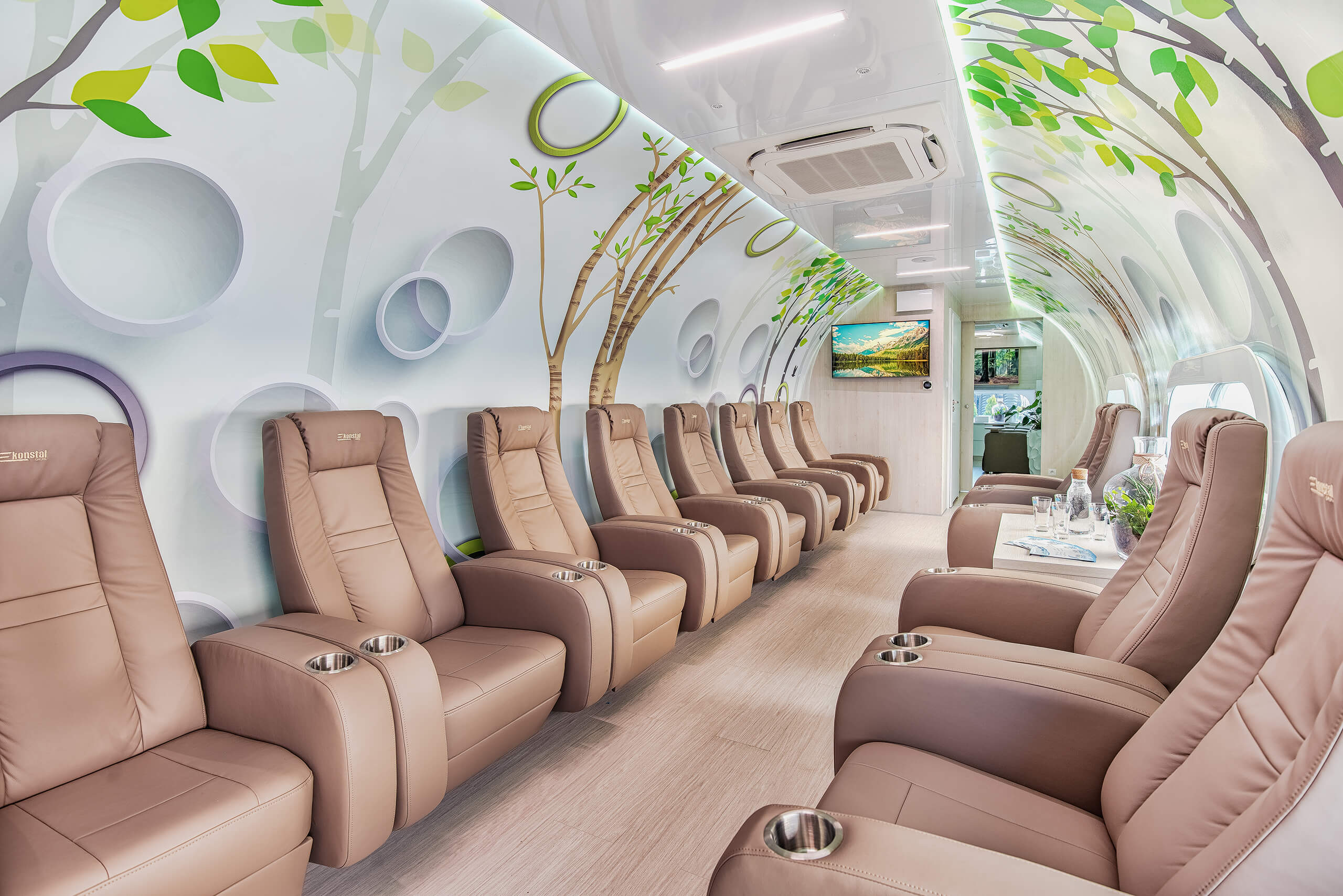
Oxygen Clinic currently describes a standard visit as two hours in a warm, quiet, oxygen-enriched room. Guests can use reclining seating, blankets and reading lights, Wi-Fi, TV and refreshments, and can read, work quietly, listen to something or sleep.
That environment may be subjectively calming for some people simply because it creates a defined period away from usual demands. The clinic itself explicitly states that its sessions are a wellness experience, not medical treatment.
What happened when 35% oxygen was studied in people with depression?
A randomised, double-blind proof-of-concept trial published in 2021 studied 55 adults with mild-to-moderate depression. The active group received approximately 35% oxygen through a nasal tube for seven hours each night for one month; controls received room air in an otherwise similar setup.
The researchers reported a greater reduction in Hamilton Depression Rating Scale scores in the oxygen group, including improvement in the anxiety/somatisation component of the scale.
A 2026 systematic review found a signal — but at medical HBOT doses
A 2026 systematic review and meta-analysis evaluated HBOT studies in psychiatric disorders. Seventeen studies involving 920 participants were included overall, with nine randomised trials contributing to meta-analysis.
For anxiety symptoms, three studies involving 124 participants produced a pooled moderate effect in favour of HBOT. But the review also found substantial heterogeneity in the wider evidence and described the overall psychiatric evidence as preliminary.
Different protocols answer different questions
| Evidence | Protocol | Signal | Can it prove Oxygen Clinic reduces stress? |
|---|---|---|---|
| 2021 normobaric O₂ depression RCT | 35% O₂ by nasal tube, 7 h/night, 1 month | Improvement in depression score and anxiety/somatisation subscale | No — very different exposure |
| 2026 HBOT psychiatric meta-analysis | Clinical hyperbaric protocols, varied studies | Moderate pooled anxiety effect across 3 studies | No — clinical HBOT is different |
| 2020 chamber study similar to Oxygen Clinic | 10 × 2 h at 1500 hPa with combined O₂ / CO₂ / H₂ atmosphere | Changes in fatigue, cognition and biochemical markers | No — small, uncontrolled, multi-variable study |
| Oxygen Clinic experience | 2 h of scheduled downtime in a chamber | Some guests may subjectively find the setting relaxing | Supports an experience claim, not a medical efficacy claim |
What did the small study using a similar chamber find?
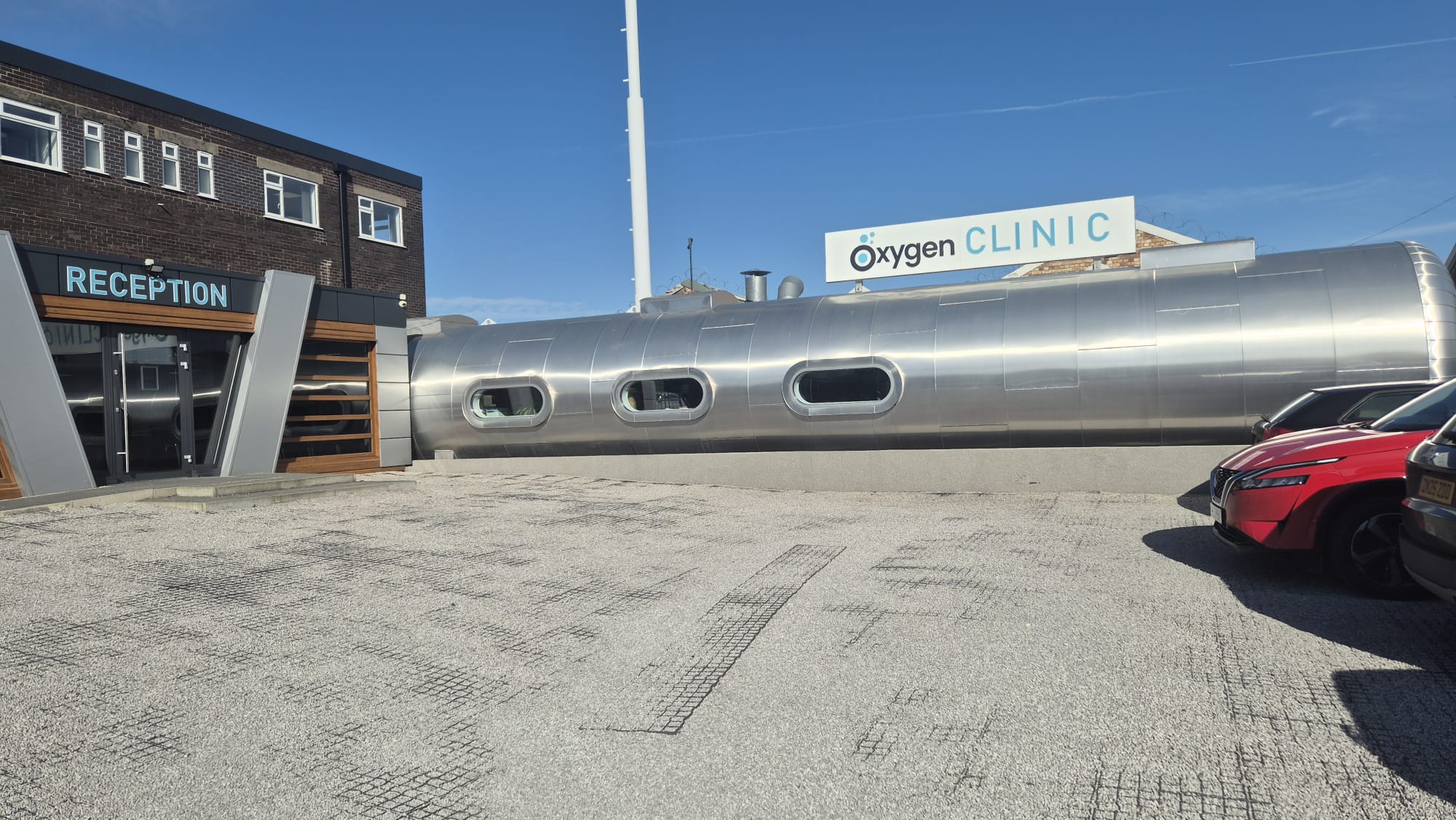
A preliminary study of 17 healthy volunteers examined ten two-hour exposures at 1500 hPa using a controlled oxygen, carbon-dioxide and hydrogen atmosphere similar to the chamber system used by Oxygen Clinic.
The authors reported improvements in some cognitive measures and a reduction in a fatigue score, alongside changes in several biochemical markers. However, there was no control group, the sample was very small and several atmospheric variables changed together.
Why the wording matters
Everyday stress can describe feeling busy, overloaded or in need of a break. An anxiety disorder, major depression or PTSD is a medical condition. Marketing language that blurs those categories can make a wellness experience sound like a mental-health treatment.
ASA/CAP guidance says objective medical claims for oxygen therapies need robust clinical evidence. CAP also treats claims to treat anxiety as medical treatment claims, not ordinary lifestyle wording.
“A quiet two-hour environment designed for rest and downtime.”
“Treats anxiety”, “reduces depression” or “resets the nervous system”.
Book the experience you can actually verify
Oxygen Clinic can legitimately offer something many people struggle to create for themselves: a scheduled two-hour period with comfortable seating and very little to organise.
If you find that quiet environment relaxing, that is a real subjective experience. It does not need to be turned into a claim that the chamber treats a mental-health condition.
A chamber is not a substitute for mental-health care
If stress is persistent, severe, affecting sleep or daily functioning, or is accompanied by panic, depression or another mental-health concern, a wellness session should not replace appropriate assessment or treatment.
Oxygen Clinic’s own current website states that the service is not intended to diagnose, treat, cure or prevent disease and advises people managing a health condition to check with their GP before booking.
Oxygen therapy, stress and relaxation: quick answers
Can oxygen therapy reduce stress?
Research using some oxygen protocols has reported changes in mood or anxiety-related measures, but the evidence is protocol-specific and does not establish that Oxygen Clinic’s two-hour wellness chamber treats stress.
Can an oxygen chamber feel relaxing?
Yes, some people may find the environment relaxing because it provides warm, comfortable seating and two hours of scheduled downtime. That subjective experience is different from a medical efficacy claim.
Has normobaric oxygen been studied for mood?
Yes. A small 2021 randomised trial using 35% oxygen for seven hours per night over one month reported improvements in depression scores, including an anxiety/somatisation subscale. The protocol was very different from Oxygen Clinic.
Has hyperbaric oxygen been studied for anxiety?
Yes. A 2026 systematic review found a moderate pooled effect across three anxiety studies, but the evidence was preliminary and involved clinical HBOT protocols rather than Oxygen Clinic’s wellness chamber.
Does Oxygen Clinic treat anxiety or depression?
No. Oxygen Clinic describes its sessions as a wellness experience rather than medical treatment and does not position the chamber as a treatment for anxiety or depression.
What can I do during the two-hour session?
You can read, work quietly, listen to something or sleep. The chamber also currently provides Wi-Fi, TV, charging, refreshments and an internal toilet.
Sources used for this guide
Interested in the experience rather than a treatment claim?
See what happens during a first session, what you can do inside and which seating option suits you.